Tech Pulse: AI Infrastructure Security Hardens, Agentic Isolation Goes Mainstream — Oct 31, 2026
NVIDIA and Eclypsium anchor trust in BlueField DPUs, Google launches ACE microVMs for agent isolation, and Arm's AGI CPU challenges AMD at the rack level. Microsoft's Nscale cancellation signals neocloud fragility, and Meta partners with Apple to run 816B-parameter models on Mac Studios. Trust, isolation, and sovereignty are the new compute primitives.
By Chiatoh Godcare Fuseh
Tech Pulse: AI Infrastructure Security Hardens, Agentic Isolation Goes Mainstream — Oct 31, 2026
The technology landscape this week converged on a single theme: the infrastructure powering AI is being rebuilt for verifiable trust and hardware-enforced isolation. Three major moves — from NVIDIA, Google, and the semiconductor ecosystem — signal that the industry has moved past "move fast and break things" into "verify, isolate, and attest."
1. Trusted Infrastructure: From Assumed to Verifiable
NVIDIA and Eclypsium announced a partnership that reframes AI security at the infrastructure layer. The core insight: AI security extends beyond models into the compute, networking, storage, firmware, and management systems that execute workloads.
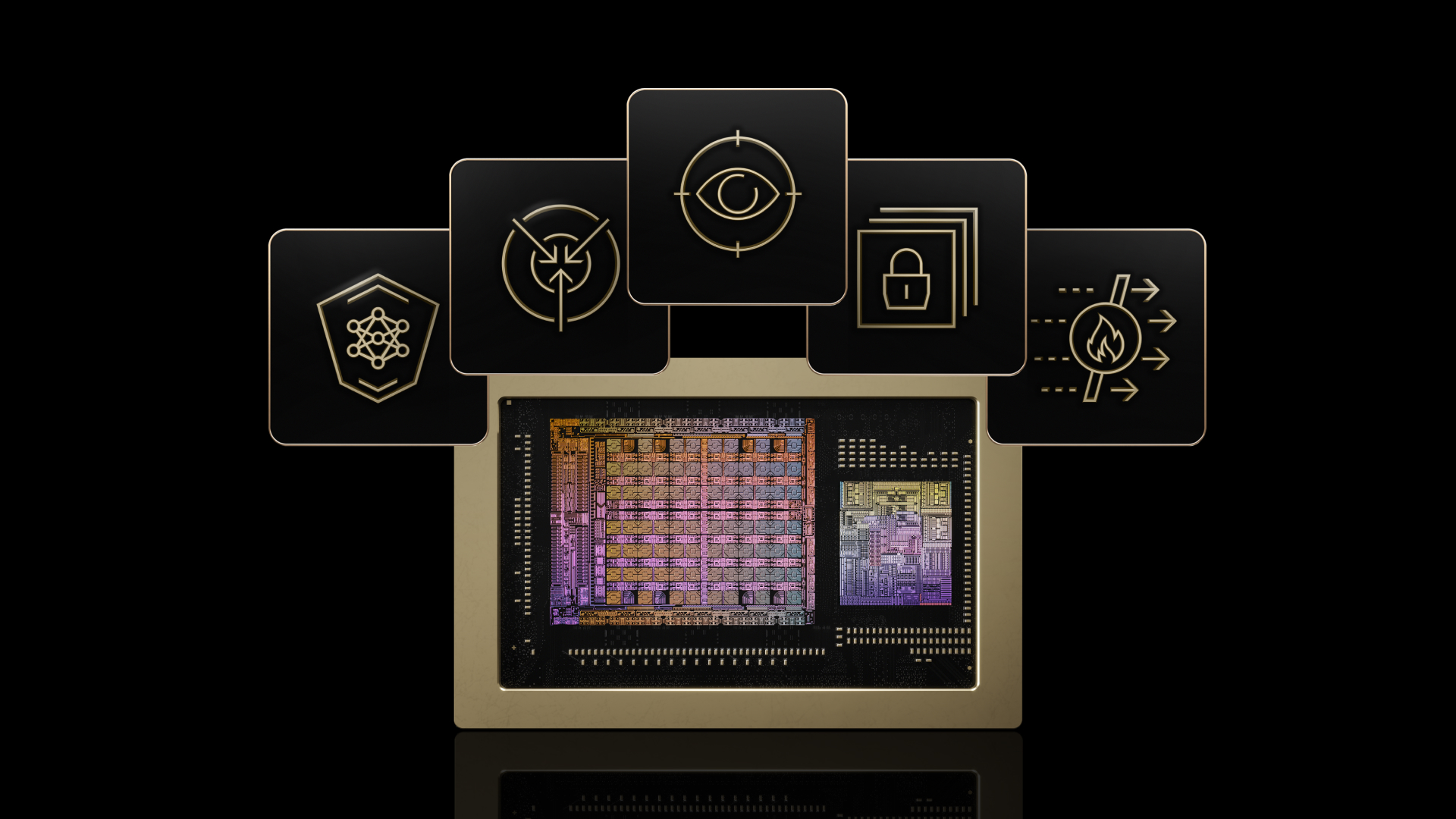
NVIDIA BlueField DPUs — already the foundation for every major cloud provider — now anchor a "chain of trust" from verified hardware and firmware through independently enforced AI agent execution. BlueField runs NVIDIA Sentry (part of the OpenShell Reference Architecture), providing out-of-band monitoring of agent behavior and real-time, in-silicon policy enforcement. Eclypsium adds continuous firmware integrity assessment and configuration monitoring.
Builder's take: This is the infrastructure equivalent of zero-trust networking. If you're building agentic systems that touch sensitive data, your threat model must now include the DPU, the firmware supply chain, and the attestation path. The BlueField separation of trust domains — infrastructure operators managing resources independently of host workloads — is a pattern we'll see replicated across the stack.
2. Agentic Isolation Goes Cloud-Native: Google ACE
Google launched Agent Compute Engine (ACE) on October 22, giving each AI agent its own microVM — a lightweight, hardware-isolated virtual computer with zero credentials, secure storage, and controlled network access. Agents wake on demand, sleep when idle, and require gateway verification for every external access.
This arrives alongside Broadcom's VMware HyperArmor (Oct 13), NVIDIA's OpenShell (Oct 21), and IBM's hardware-rooted attestation for Vault/Terraform. The pattern is unmistakable: "rogue agent" incidents this year forced infrastructure vendors to build isolation below the orchestration layer.
Builder's take: The build-vs-buy debate for enterprise AI just got a new data point. ACE runs Gemini agents today; customer preview comes in months. If you're evaluating on-prem vs. cloud for agent workloads, the microVM model — zero-credential sandboxes, gateway-mediated credentials, host-level isolation — is the new benchmark. But note: Gemini Enterprise's management plane stays in Google's cloud. True air-gapped sovereignty still means building your own.
3. The Hardware Race: Arm Challenges AMD, TSMC Prints Money, Meta Meets Apple
The Tetmo Technology Brief (Oct 30) packed multiple seismic signals:
- Arm's AGI CPU nearly doubles AMD EPYC 9755 rack-level performance across seven agentic AI workloads (Signal65 assessment). The inference battleground is shifting from GPU-only to CPU+accelerator heterogeneity.
- TSMC posted record quarterly profits as every major player competes for advanced wafer capacity. The foundry bottleneck is real and worsening.
- Nscale's IPO is threatened after Microsoft cancelled a critical UK data center deal — a reminder that neoclouds live and die by hyperscaler commitments.
- Meta + Apple are optimizing the 816B-parameter Muse Spark model for Mac Studio execution. Desktop-class inference for frontier models is arriving faster than expected.
- US data center land spending hit $6B in H1 2026 — power access now drives land value, restructuring how developers secure AI compute capacity.
- NVIDIA claims 40% of data center power is wasted — shifting the bottleneck from chips to grid connections.
Builder's take from Cameroon: Building APKLab and BusGoCM here means watching these infrastructure shifts closely. When memory prices spike (Samsung HBM records), when power becomes the constraint, when hyperscalers cancel deals — the ripple effects hit emerging markets hardest. But they also create openings: portable serving stacks (vLLM, inference gateways), sovereign inference chips (FuriosaAI's $620M Korea-backed round), and desktop-class model execution (Meta/Apple on Mac Studio) all lower the barrier for builders outside the traditional corridors.
The Pattern: Sovereignty, Verification, Portability
Three vectors define this week:
- Sovereignty — Nations and enterprises want control over their AI stack (Korea backing FuriosaAI, EU data regulations, on-prem agentic security).
- Verification — Trust is moving from assumed to cryptographically attested (BlueField attestation, ACE gateway verification, IBM hardware-rooted identity).
- Portability — The winning serving stacks are hardware-agnostic (vLLM, inference gateways) so you can swap accelerators as the economics shift.
What I'm Watching
- OCP Summit fallout: Intel, AMD, NVIDIA new server designs — which rack architectures win?
- ACE pricing & GA: Will microVM isolation carry a premium that pushes workloads back on-prem?
- Nscale's Plan B: Can they survive the Microsoft cancellation, or is this the first neocloud casualty?
- Desktop inference: Meta/Apple on Mac Studio — when does 816B params on-device become a builder primitive?
Cover image: NVIDIA BlueField DPU architecture diagram from "Building Trusted AI Infrastructure for Safe and Secure AI" (NVIDIA Blog, Oct 29, 2026). Source: NVIDIA / Eclypsium partnership announcement. Photographer credit: NVIDIA.
Sources: NVIDIA Blog (Oct 29), TechTarget (Oct 30), The Technology Brief / Tetmo (Oct 30).