Tech Pulse: TSMC's 2nm Ramp & Google's Quantum Magic — Oct 30, 2026
TSMC's 2nm nanosheet transistors hit volume production with 70% CAGR through 2028, while Google Quantum AI demonstrates 40x error reduction via magic state cultivation on Willow. Two breakthroughs rewriting the compute stack from silicon up.
By Chiatoh Godcare Fuseh
Tech Pulse: TSMC's 2nm Ramp & Google's Quantum Magic — Oct 30, 2026
Two stories this week signal where the next decade of compute is heading: TSMC's 2nm nanosheet process entering high-volume production with aggressive scaling targets, and Google Quantum AI cracking the magic state bottleneck with a 40x error reduction on their Willow processor. One story is about scaling the known physics of silicon; the other is about making quantum error correction practical. Together, they bracket the compute landscape.
TSMC's 2nm: Nanosheets Go Industrial
TSMC's N2 (2nm) process started volume production in Q4 2025 as planned, marking the industry's first deployment of nanosheet gate-all-around transistors at scale. The numbers are staggering: monthly 2nm capacity targeting ~100,000–120,000 wafers by end of 2026 across five fabs (two in Hsinchu, three in Kaohsiung), with a projected 70% compound annual growth rate through 2028. First-year 2nm output is already tracking 45% above 3nm's first-year volumes.
Key customers — Apple, NVIDIA, AMD, Qualcomm, MediaTek — have reportedly raised 2nm family orders by 10–20%. The N2 family extends beyond the base node: N2P (performance-enhanced) and A16 (backside power delivery, effectively 1.6nm-class) are already in development, with A14 (1.4nm) targeting 2028 volume production for smartphones and HPC.
What this means for builders: the silicon roadmap is not slowing. Every major AI accelerator, smartphone SoC, and HPC chip shipping in 2027–2029 will ride this curve. If you're architecting systems today, assume 2nm-class density and efficiency are the baseline by 2028.
Google Willow: Magic State Cultivation Breaks the 40x Barrier
On October 15, Google Quantum AI published in Science a practical demonstration of "magic state cultivation" on their Willow processor — a protocol that reduces magic state errors ~40x compared to uncultivated states, achieving 99.99% logical fidelity for T-states. This matters because magic states are the fuel for non-Clifford operations (the ones that give quantum computers their advantage over classical). Historically, producing them consumed up to 95% of a quantum computer's resources.
The cultivation approach works like a filter: inject a noisy state into a small patch of qubits, run coordinated measurements to detect and discard errors, and "grow" a high-fidelity magic state using far fewer physical qubits. Google's experiment also demonstrated grafting between color codes (ideal for cultivation) and surface codes (established for memory), proving purified states can transfer across architectures.
Caveats remain: only ~8% of runs produced usable magic states, and Willow's error rates still need further reduction for practical algorithms. But this is the first time the theory has survived contact with hardware.
The Builder's View: From Cameroon to the Compute Frontier
Building APKLab and BusGoCM in Cameroon teaches you to watch infrastructure inflection points. When TSMC says 70% CAGR on 2nm, that's not a press release — it's a capacity commitment that determines which AI models can be trained, which inference costs plummet, and which products become viable in markets like ours where compute cost is a hard constraint.
Similarly, Google's 40x magic state improvement isn't just a lab result. It shrinks the quantum computer needed for useful chemistry simulation by an order of magnitude. That moves the timeline for quantum-accelerated drug discovery, battery materials, and catalyst design from "someday" to "this decade."
The pattern across both stories: the bottleneck is moving up the stack. Silicon scaling solves density; quantum error correction solves noise. The next competitive frontier is system architecture that composes these capabilities — chiplets, advanced packaging (CoWoS growing 80%+ annually), and hybrid classical-quantum workflows.
What I'm Watching Next
- TSMC's Arizona Fab 21 Phase 2 (3nm, 2027) and Kumamoto Fab 23 Phase 2 (3nm, 2028) — geopolitical resilience of the leading-edge supply chain
- Magic state cultivation yield — getting from 8% to >50% success rate on Willow
- A16 backside power delivery — the first commercial nanosheet + BSPDN combo, a template for post-2nm nodes
- Hybrid algorithms — classical pre/post-processing around quantum subroutines (VQE, QAOA) becoming production-ready
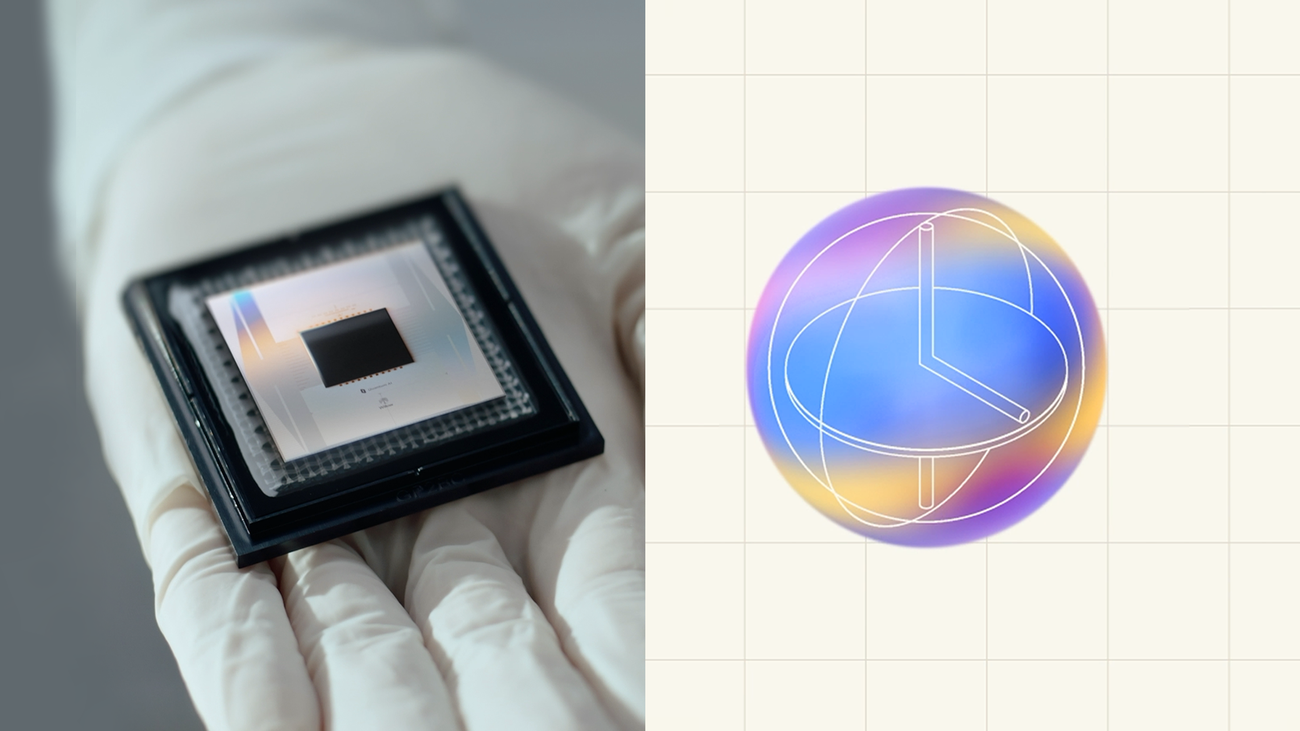
Cover image: Magic state cultivation visualization on Google's Willow processor. Source: "Bringing the magic: Google breaks open a bottleneck in quantum computing" by Emma Rosenfeld & Craig Gidney, Google Quantum AI Blog, October 15, 2026. Image credit: Google Quantum AI.
TSMC 2nm data sourced from: TSMC 2nm Technology page (tsmc.com), Taipei Times (April 29, 2026), EDN/Investing.com (2026), TechNode (August 5, 2026).